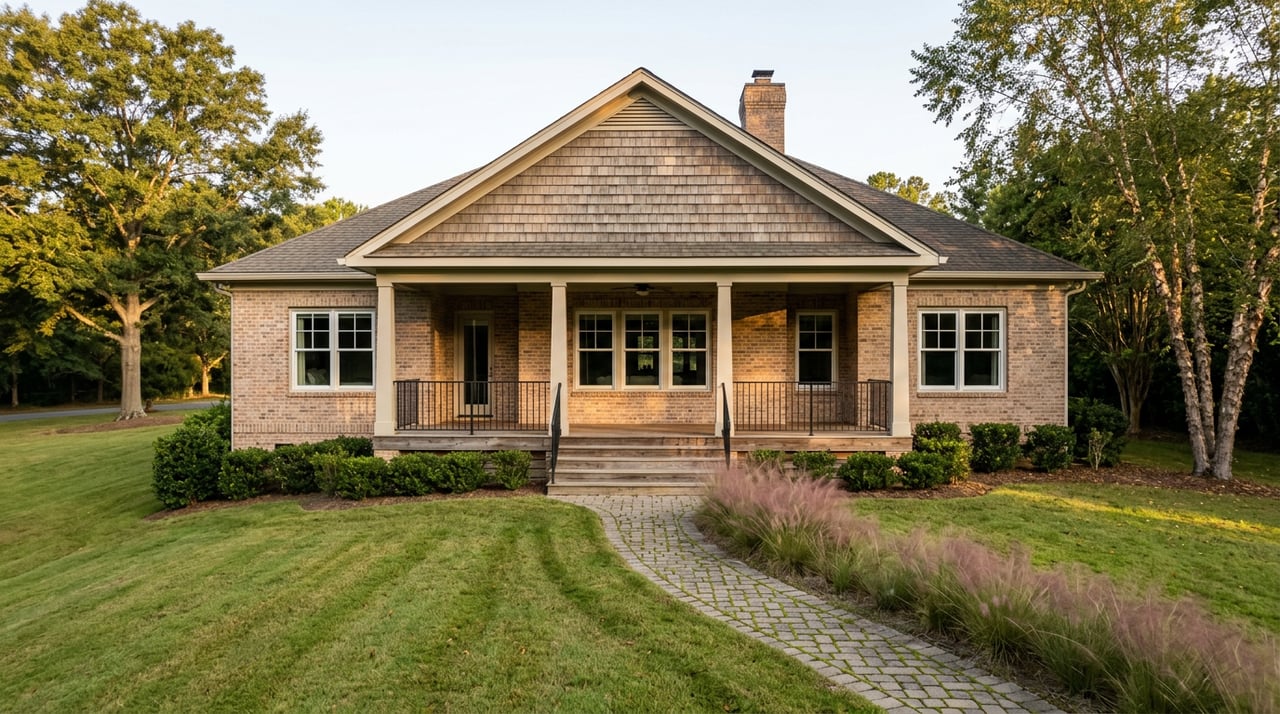
You've found the one. A stone's throw from the water near Heber Springs, a covered dock bobbing at the end of the yard, photos that practically sell themselves. You picture summer evenings tying off a boat right there. Then, somewhere between the inspection and the closing table, someone mentions that the dock isn't actually part of the sale.
That surprise catches more lake buyers than it should, and it isn't a rumor or a technicality someone's trying to spring on you. It's federal regulation. On Greers Ferry Lake, the boat dock you see in the listing photos exists because the current owner holds a permit from the U.S. Army Corps of Engineers, and that permit does not survive the sale. It ends the moment the deed changes hands.
The Permit Resets the Day the Deed Does
Here's the part most buyers never learn until they're already under contract: nobody actually owns lake frontage on Greers Ferry. The Army Corps of Engineers manages the entire shoreline as government property, and any dock sitting on that shoreline is there because the Corps granted a shoreline use permit to a specific person, not to the parcel itself. Federal rule spells this out directly: shoreline use permits are nontransferable and are voided upon sale of the property.
That means the seller's dock, no matter how solid or how long it's been there, does not pass to you as part of the transaction. What you're buying is the house, the lot, and the right to apply for your own permit. Whether you get one, and how long that takes, is a separate process that starts from zero.
Here's how that breaks down at closing:
| At closing | What happens |
|---|---|
| House, garage, fenced yard | Transfers to you like any normal sale |
| Land up to the government boundary line | Transfers with the deed |
| Existing dock and any stone steps on the shoreline | Do not transfer; the permit is voided |
| Shoreline use permit itself | Ends automatically; you apply as a brand-new applicant |
There's No Real "Lakefront" on Greers Ferry, Only a Boundary Line
This is the part that surprises people who've owned on other lakes. The Corps owns all 276 miles of shoreline boundary around Greers Ferry Lake, not just the parts near the dam or the campgrounds. Every house that appears to sit on the water actually stops at a property line short of it, and locals have a name for that line: the white line. Past it, you're on government land, and anything you build there, including a dock, exists only with the Corps's permission.
So the phrase "lakefront property" on Greers Ferry is really shorthand for "property that borders the shoreline boundary," not a claim of ownership over any water frontage. It's a useful distinction to hold onto when you're comparing a listing here to a lake home somewhere without a Corps-managed shoreline, where the dock genuinely is part of the real estate.
A Case That Shows How Little Protection the Permit Offers
In 2010, a couple named John and Kim McClung bought a vacation home next to Greers Ferry Lake. The previous owner had a permit for a dock and a set of stone steps on the shoreline, and like every permit on this lake, it voided the moment the McClungs closed. They did things the right way: they met with a Corps ranger, applied for their own permit, and received it in January 2012.
A little over a year later, the Corps revoked that permit after finding the couple had caused herbicide to be sprayed on the public land near their dock, then later cleared the recovering vegetation. The McClungs challenged the revocation in federal court and lost. The Eighth Circuit's ruling on the case was blunt about what these permits actually are. Shoreline use permits, the court wrote, "do not convey any real estate or personal property rights" to the person holding them.
That's the plain reality worth sitting with before you fall in love with a dock in a listing photo. Even after you clear the application hurdle, the permit isn't yours in any lasting sense. It exists at the Corps's discretion and can be pulled for something as ordinary as mowing the wrong patch of brush.
Whether You Even Qualify Can Come Down to Feet of Shoreline
Getting a new permit isn't just paperwork. The Corps's Shoreline Management Plan sets minimum footage requirements before a lot even qualifies for a dock or an addition to one. In one example spelled out in the plan itself, a lot with a shared property line of 100 feet but only 60 feet of usable shoreline footage below it isn't eligible to add a slip at all, regardless of what the current owner has done there informally.
Density matters too. Coves that already have a cluster of permitted docks are less likely to see new ones approved. And timing is its own variable: in past years when funding was tight, the Corps has closed the door to new shoreline use permit applications entirely for months at a stretch, telling applicants to wait until October before it would even process a request. There's no guarantee that kind of pause won't happen again, which is exactly why it's worth asking before you assume a summer of boating is part of the deal.
What to Ask Before You Write an Offer
A few phone calls now save a lot of frustration later.
- Call the Greers Ferry Project Office near the dam on Highway 25, about three miles north of Heber Springs, before you get attached to a dock you saw in photos.
- Ask the seller or listing agent for the permit number and issue date, not just confirmation that "yes, there's a dock."
- Have your agent check the parcel's actual shoreline footage against the Shoreline Management Plan's minimum, rather than eyeballing it from the yard.
- Ask whether the Corps is currently accepting new shoreline use permit applications for that section of the lake. It has paused intake before, and there's no public promise it won't again.
- Build the reapplication timeline into your plans. If dock access matters to how you'll use the house this season, don't assume it'll be ready the day you close.
- If the process sounds like more than you want to take on, ask about slip rental instead. Heber Springs Marina, a few miles west of town, rents slips by the year or the night, which sidesteps the permit question entirely.
What This Means If You're Comparing Lake Homes
Once you know the permit doesn't transfer, it changes how you should weigh two otherwise similar listings. A house with a photographed dock isn't automatically worth more to you than one without, because the dock in the photo may not be part of what you're actually buying. The house without a visible dock but with generous, qualifying shoreline footage might be the safer bet, since you'd be starting the permit process on solid ground instead of hoping an existing structure survives the transfer.
For sellers, this cuts the other way. Documenting your permit's status, its issue date, and its compliance history gives a buyer something concrete to evaluate instead of a question mark. That kind of transparency tends to move a lake listing faster than leaving the dock as an assumed extra.
FAQ
If there's no dock at all right now, can I add one after I buy? Only if the lot qualifies. The same shoreline footage and density rules apply to new applications as they do to replacing an old one, so a lot that looks like it has plenty of water access on paper might still fall short of the Corps's minimum.
Does any of this apply to a home in Heber Springs that isn't directly on the lake? No. The permitting rules only touch properties that border the Corps-managed shoreline itself. A home elsewhere in town, even one a short drive from the water, isn't affected by any of this.
Does the previous owner's permit for mowing or clearing brush near the shoreline transfer either? No. Those are separate special use permits, and they reset at sale the same way the dock permit does.
Buying near Greers Ferry Lake is still one of the better reasons to move to this part of Arkansas, and most of the friction here is manageable once you know to ask about it early instead of finding out at the closing table. If you're weighing a lake property in Heber Springs and want someone local to walk the permit question through with you before you write an offer, Howell Realty Pros has handled exactly this kind of transaction here. Reach out through our Heber Springs page or talk to principal broker Liz Howell directly, and we'll help you sort out what actually comes with the house before you're too far in to ask.