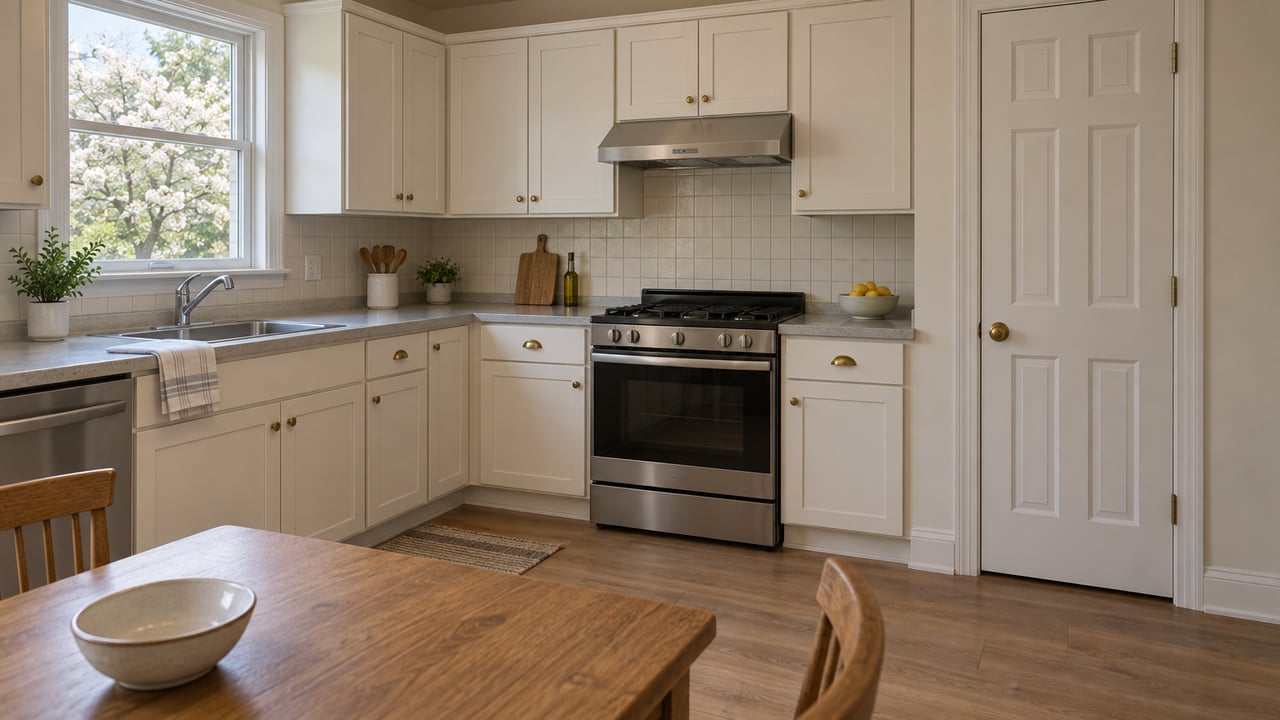
Every August, tenants in a handful of Harding University-owned apartment buildings on Center Street and Market Street get a new number for their rent. It isn't set by a market study or a comp pull from nearby listings. It comes from the university's own Finance Office, decided once a year on an internal calendar that has nothing to do with how many students just enrolled or how tight the local rental supply happens to be that fall.
That detail matters more than it looks like it should, because Harding just posted one of its strongest enrollment years in recent memory. If you're weighing a rental property near campus and assuming that growth translates cleanly into rising rents, the mechanism working against you isn't weak demand. It's the fact that a meaningful share of Searcy's student housing supply isn't priced by the market at all.
The University Is Also the Landlord
In most college towns, the school teaches students and the private market houses them. Searcy runs differently. Harding directly owns and operates apartment complexes for its own students, including furnished and unfurnished units on East Center Street across from Searcy Hall, and a separate group of one-bedroom and two-bedroom townhouse-style units on Market Street near the science building, close enough to Harding Academy Elementary to be considered part of the same residential pocket. Rent structures vary by building. Some include water, sewage, and garbage. Others leave tenants responsible for wifi and electricity on top of those utilities. What's consistent across all of them, according to the university's own housing office, is that increases happen once annually, in August, set internally rather than through the kind of continuous repricing a private landlord does when a lease comes up for renewal.
That's a different animal than a private landlord watching vacancy rates and adjusting asking rent month to month. Harding doesn't need its housing division to hit a market rate of return. It needs enough beds filled to support the academic mission, and it can hold a price for a full year regardless of what's happening two blocks away in the private market. For anyone comparing Searcy to a typical college town where students bid against each other for a limited pool of privately owned units, that's the detail that changes the math.
What the Enrollment Surge Actually Did
The fall 2025 numbers were real. Harding welcomed 1,111 new undergraduate students, an 11.2 percent jump over the prior year, pushing total enrollment to 4,802 students representing 46 states and 64 countries. Retention came in at 85.3 percent, which the university's leadership pointed to as evidence that students who arrive are staying. That's a genuine demand shock in a city of roughly 24,000 people.
In a town where the school has no owned housing stock of its own, a jump like that shows up almost immediately as upward pressure on private rents, because every one of those students needs a bed somewhere off campus. In Searcy, a portion of that demand gets absorbed directly into Harding's own buildings before it ever reaches a private landlord's applicant pool. The private rental market isn't competing for all 1,111 new students. It's competing for whatever's left after the university's own housing fills up, plus the students who prefer off-campus living, plus married students, graduate students, and staff who were never candidates for university-run housing to begin with.
What $816 a Month Actually Buys You Near Campus
As of late September 2026, the average rent across Searcy sits around $816 a month, compared to a national average closer to $1,665. That gap gets read one of two ways. Either Searcy is simply an affordable market, full stop, or something structural is holding the number down even as demand rises. Given what's happening with enrollment, the second explanation fits better.
An average that low, in a year with an 11 percent enrollment surge, is easier to explain once you know the university itself is one of the larger landlords setting price anchors nearby. A private owner two streets from campus isn't just competing against other private owners. They're competing against a landlord whose pricing logic runs on an annual internal cycle instead of continuous market feedback, and who has no obligation to chase the same rent growth a for-profit owner would want. That tends to hold nearby private rents closer to the university's own numbers than they'd otherwise sit, at least until vacancy in Harding's own stock gets tight enough to push overflow demand hard into the private market.
The Overflow Segment Is the Real Opportunity
None of this means Searcy is a weak rental market. It means the addressable tenant pool for a private landlord near campus is narrower and more specific than "any of the new students Harding just enrolled." The realistic private-market renter tends to be an upperclassman who wants off-campus independence, a married student, a graduate student, Harding staff, or someone connected to the university's broader orbit who isn't eligible for or interested in campus-owned housing.
There's also an event-driven layer worth knowing by name. Harding's Spring Sing, an annual musical production staged over Easter weekend by the university's social clubs, draws an estimated 12,000 attendees each year, many of them family and alumni who need somewhere to stay for a long weekend that campus dorms and hotels can't fully absorb. Home football weekends carry similar short bursts of visiting traffic, particularly since the Bison's 2023 Division II national championship raised the program's profile. Those aren't year-round tenants. They're short, predictable spikes tied to a university calendar rather than the broader academic-year lease cycle.
If You're Weighing a Short-Term Rental Instead
For an investor thinking about capturing that event traffic rather than competing for long-term student leases, Searcy has a specific ordinance to work within. The city's short-term rental rules took effect January 1, 2023, and require a business license through Searcy Code Enforcement, a fee that has run around $25. Beyond the license, owners need to designate a local property representative available to respond to issues during a stay, pass a fire marshal inspection, and meet off-street parking requirements. Maximum overnight occupancy is capped at two people per bedroom plus two additional guests, and the property has to post information on evacuation routes, noise restrictions, and trash handling for guests to see.
The City of Searcy's short-term rental page has the current packet and application. None of this is unusual by short-term rental standards elsewhere, but the specific occupancy formula and licensing step catch owners off guard if they're used to markets with looser rules.
The Legal Ground Rules Are Different Here
Arkansas's landlord-tenant framework adds another layer that surprises investors coming from other states. Arkansas is the only state in the country without a default implied warranty of habitability, meaning a landlord's obligation to keep a unit livable depends on what the lease actually says rather than a baseline legal guarantee. Leases signed after October 2021 carry some narrower habitability protections unless the tenant waives them in writing, but the state's default position remains unusually favorable to owners.
A few other specifics worth knowing before writing a lease here:
- Security deposits are capped at two months' rent, and landlords have 60 days after lease termination to return the deposit or provide an itemized list of deductions.
- Arkansas allows criminal charges against a tenant who fails to pay rent and refuses to vacate, one of the only states where nonpayment can carry that exposure, though the process still requires proper written notice before an unlawful detainer action.
- A 2025 state law, Act 459, removed local governments' authority to regulate the amount a landlord can charge for a rental application fee or security deposit, which means Searcy's city code can't override state limits on those specific charges even if it wanted to.
- The same legislative session created new property management broker and associate license categories under the Arkansas Real Estate Commission, formalizing a licensing path for anyone managing rentals professionally rather than just holding a standard real estate license.
None of this is legal advice, and an attorney familiar with Arkansas Code Title 18 is worth the consultation before finalizing lease language, particularly around habitability terms. But knowing the baseline going in changes what you negotiate for in a lease and what you assume is covered by default.
What This Means If You're Comparing Searcy to Other Markets
The instinct to treat Harding's enrollment growth as a straight-line predictor of rental demand makes sense on paper. It just doesn't hold in a town where the university is filling a chunk of that demand with its own housing stock, on its own pricing schedule. The private market here serves a narrower, more specific tenant, and the real upside sits less in chasing enrollment headlines and more in understanding who's actually left to rent from you once Harding's own buildings are full.
If you're evaluating a rental property near Harding, or want a clearer read on how Searcy's private rental segment behaves against the university's own housing, our team has also put together a closer look at what local property management actually covers for Searcy owners, from lease structuring to the kind of tenant screening that matters most in a market like this one.
FAQ
If the university sets its own rents once a year, does that mean nearby private rents are permanently capped? Not permanently. Harding's internal reset happens on its own schedule and can move independent of the private market in either direction. It anchors nearby pricing rather than fixing it, which means private rents can still rise, just not always in step with enrollment headlines.
Can I legally run a short-term rental near campus for weekends like Spring Sing or home football games? Yes, provided you go through the City of Searcy's licensing process: a business license through Code Enforcement, a designated local property representative, a fire marshal inspection, and compliance with the occupancy and parking rules in the 2022 ordinance.
Since Arkansas doesn't guarantee habitability by default, can I skip routine maintenance and inspections? No. The absence of a default warranty shifts more of the burden onto lease language rather than eliminating a landlord's practical obligations. Code enforcement can still act on major violations, and leases signed after October 2021 carry some habitability protections unless waived in writing.
Understanding what actually moves rents near a university town takes more than a national average and a headline about enrollment. If you're weighing a rental purchase in Searcy and want a read on the numbers that actually apply to your situation, Howell Realty Pros can walk through what a specific property or block is likely to rent for and what ownership actually looks like day to day.